

 Français
An Alpine resort built on a deserted plateau in the 1960s, now a benchmark for mountain architecture
-
 Heritage
-
 3 min read
The resort was created in the 1960s under the Plan Neige, a programme launched by the Pompidou government to build ski resorts able to accommodate large numbers of middle-class holidaymakers in search of leisure. Its architecture, dominated by large concrete complexes, drew sharp criticism from the outset. Decades later, it became a model cited by mountain planners.
In this section
Images
By downloading content, you accept the terms of use.
Resources
By downloading content, you accept the terms of use.
A resort born from the Plan Neige
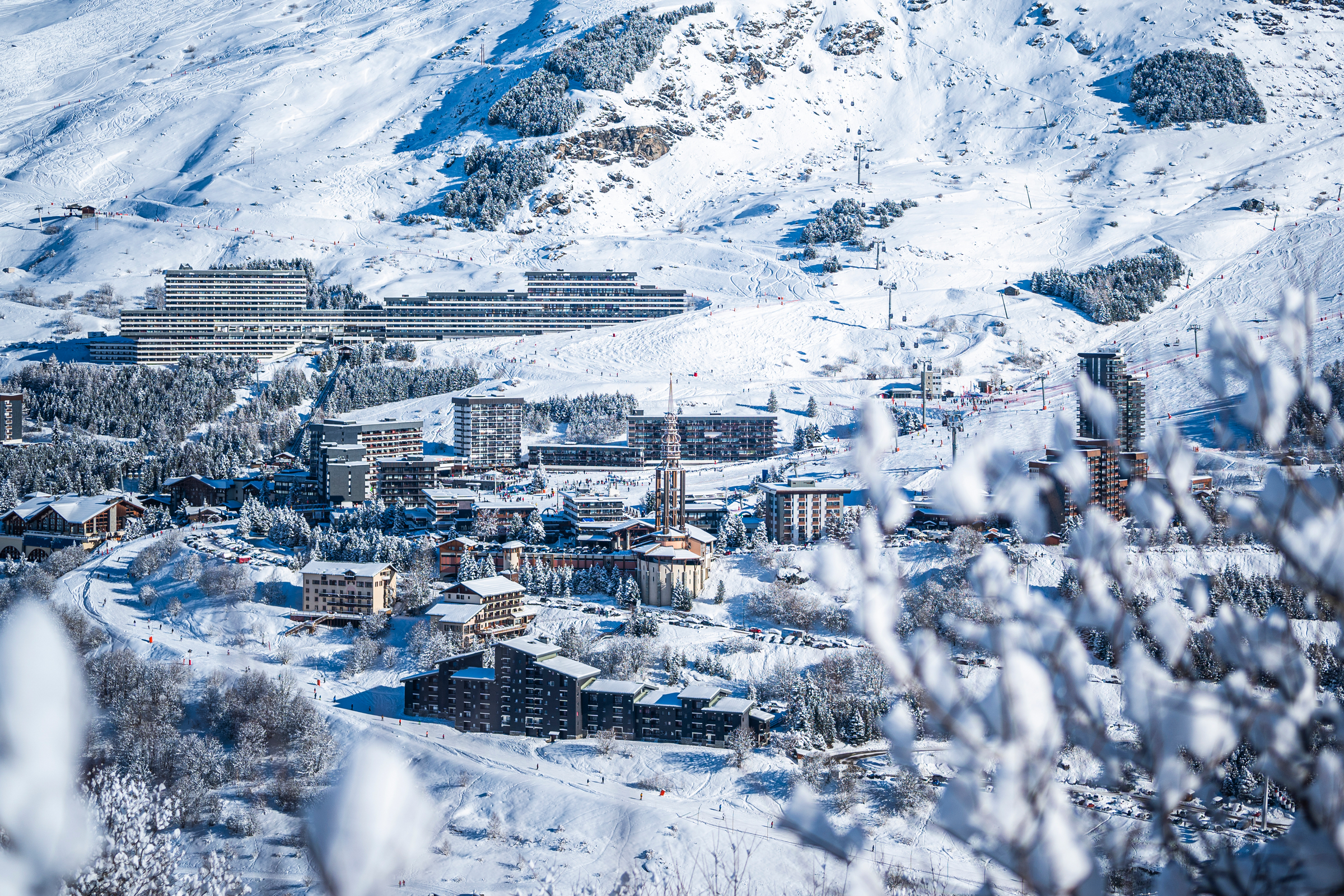
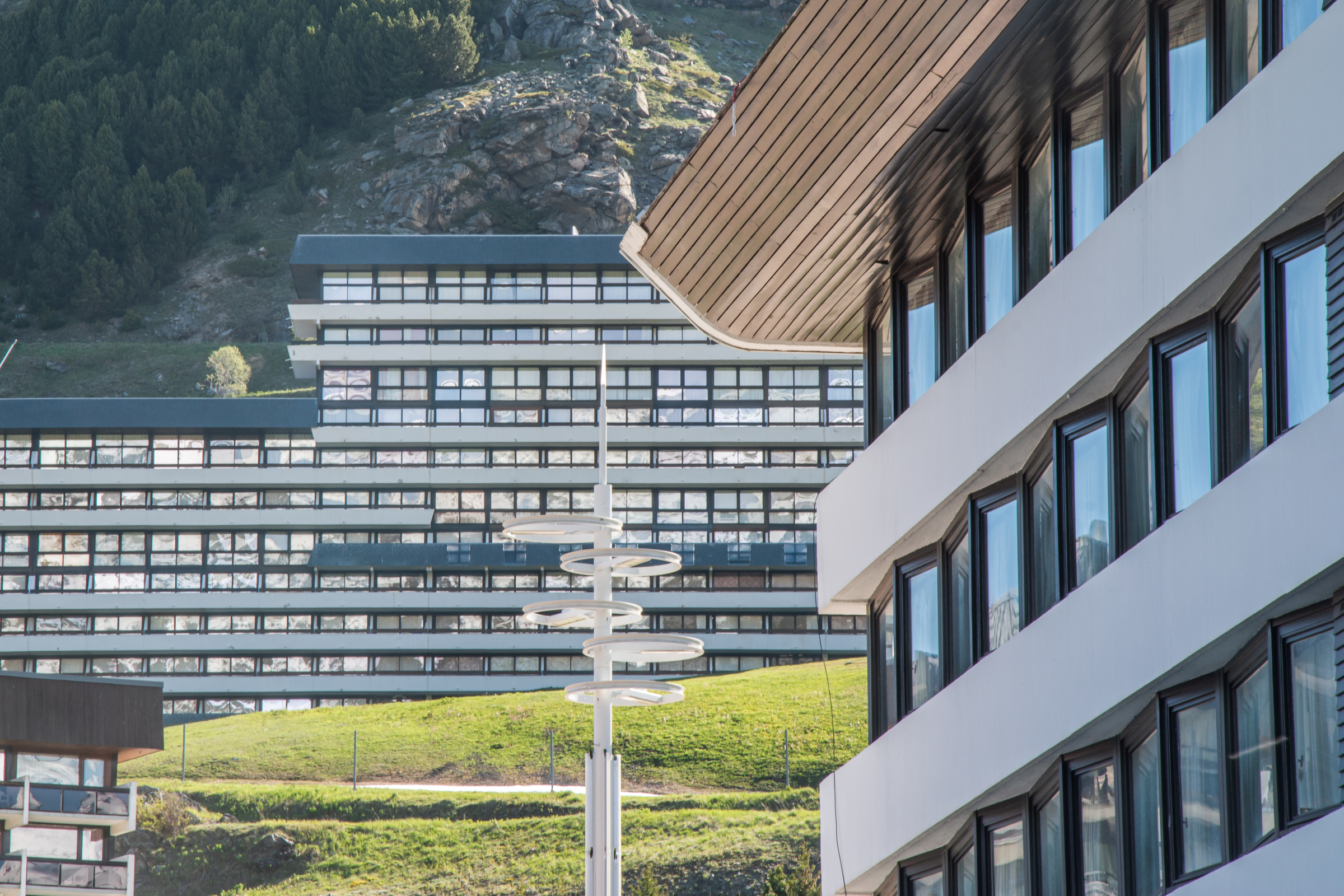
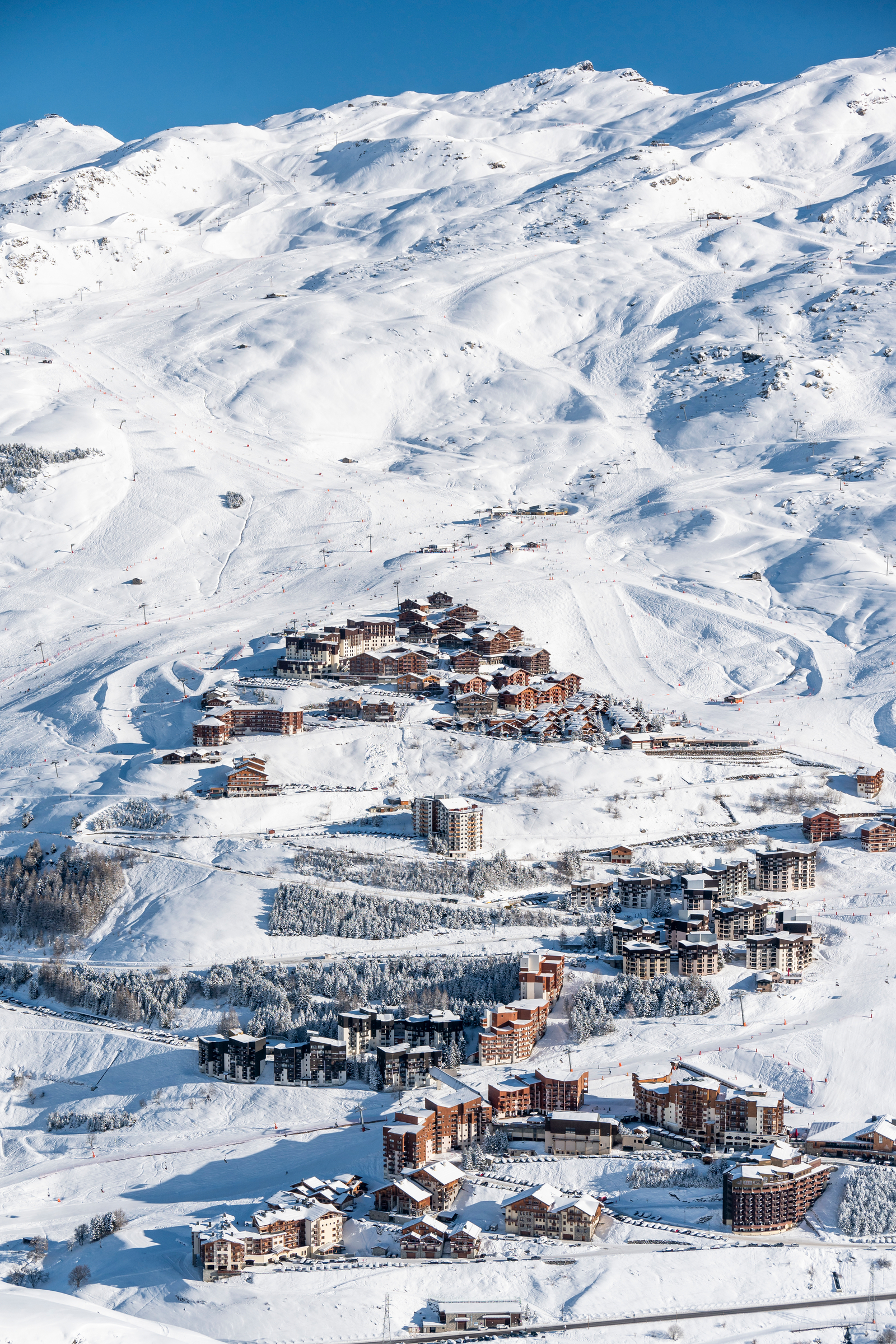
The first buildings and drag lifts appeared in 1964 on the plateau des Boyes, then an uninhabited site above the village of Saint-Martin-de-Belleville. This initial group, which included the workers' hostel Le Solaret, formed the La Croisette district. Construction of Le Brelin began in 1972: a 640-flat building whose sheer scale and architectural mass earned it the nickname "snow liner". The building was listed as a heritage building of outstanding 20th-century architecture in 2012.
A contested architectural style from the outset
The resort's functionalist approach — no cars, buildings clustered near the pistes, covered shopping arcades — split press opinion from the 1970s onwards. In June 1977, the Touring Club de France described the resort's towers as "family lockers" with a "shameful" appearance. Other publications took a more favourable view. In 1973, La Montagne praised the site's functional character, and La Voix du Nord that same year welcomed the choice of modern architecture over an "operetta Savoyard village". In 1975, Nord Éclair described a "coherent whole". Le Figaro, in 1977, highlighted the ecological benefit of concentrating beds at altitude rather than across 2,000 individual chalets. In 1975, the Touring Club Belgique observed that the cluster of blocks and towers, poorly received at first, was winning over a growing number of skiers thanks to its shops, hospitality and competitive prices.
The birth of the Les 3 Vallées ski area
The Allamands drag lift, installed in 1973, linked the resort to Méribel and created the Les 3 Vallées ski area, described as the largest ski area in the world with 600 km of pistes. Although the Plan Neige ended in 1977, construction continued in the same period with the trapezium-shaped Preyerand buildings and the Dorons and Neige et Ciel towers, extending the architectural controversy that had begun with the resort's creation.
A decade of decline in the 1990s
In the 1990s, the resort's architecture again came under fierce criticism. Some landmark buildings were demolished, including the original hostel Le Solaret, while others proved difficult to renovate.
From a derided model to a heritage benchmark
From the 2000s onwards, attitudes towards this architecture began to shift. The purpose-built resort model, long mocked, became a source of inspiration regularly cited by planners seeking to design more responsible mountain architecture. This recognition was reflected in Le Brelin's listing as a heritage building of outstanding 20th-century architecture in 2012, followed by the 2024 renovation of La Croisette, the resort's historic shopping and services district.
Key points
- The plateau des Boyes, an uninhabited site above the village of Saint-Martin-de-Belleville, was home to the resort's first buildings and drag lifts from 1964.
- Le Brelin, a 640-flat building constructed from 1972 and nicknamed the "snow liner", was listed as a heritage building of outstanding 20th-century architecture in 2012.
- The drag-lift link with Méribel, opened in 1973, created the Les 3 Vallées ski area, described as the largest ski area in the world.
- In the 1990s, several landmark buildings, including the original hostel Le Solaret, were demolished, while others struggled to be renovated.
- La Croisette, the resort's historic central shopping district and the heart of its shops and services, was renovated in 2024.