

 Français
Avalanches, helmets and quiet pistes: how the ski area cuts risk
-
 Ski Area
-
 4 min read
Ski area safety rests on several complementary measures: control of avalanche risk, facilities for beginners, prevention campaigns and rules of conduct on the pistes. Piste patrollers and ski-lift teams carry out this work both ahead of the season and during periods of heavy snow.
In this section
Images
By downloading content, you accept the terms of use.
Resources
By downloading content, you accept the terms of use.
PIDA: the avalanche-control plan
During heavy snowfall, dedicated teams can activate an Avalanche Control Plan (PIDA). The plan can close part of the ski area, along with certain roads. On the ski area, the sectors likely to be affected are Combes, Saint-Martin, Mont de La Chambre and Masse: access to these is banned entirely for the duration of the operation, and piste opening is delayed. On the road network, the RD117 linking Moutiers to Val Thorens can close, particularly between Les Menuires and Val Thorens and between Fontaine-le-Puits and Pont de La Combe.
The PIDA protects pistes, ski lifts, roads, paths and infrastructure, but it does not cover off-piste areas. Each ski area applies its own plan, approved by municipal and prefectural order, and uses a range of techniques: Gazex, a tube visible on the slopes; Catex, an installation similar to a ski tow that allows blasts in hard-to-reach areas; and manual blasts. An avalanche-control operation is triggered when snowfall, wind or a rise in temperature causes snow to build up or grow heavier until it poses a danger. Qualified avalanche blasters among the piste patrollers then choose the most suitable moment, usually the morning before the pistes open, though sometimes during the day with a temporary closure. The number of operations varies between 25 and 30 a season, depending on the year. All piste patrollers in Les Menuires and Saint-Martin-de-Belleville hold the avalanche-blaster qualification.
Accidents on the pistes: figures versus perception
According to Benjamin Blanc, director general of the body that runs the pistes across the Belleville valley — which covers Saint-Martin, Les Menuires and Val Thorens — 80% of skiers over 35 who are injured while skiing never put skis on again. Women make up most of the injured and also influence other people's decisions, which is why they receive particular attention.
The director distinguishes between the feeling of being unsafe and the real accident rate, with no direct correlation between the two, though each affects people's willingness to return to skiing. The real accident rate has stayed broadly stable over the long term, while the feeling of being unsafe has grown, driven in part by skiers' general speed and a generally limited technical level. Accidents involving public figures, sometimes fatal, also help create an image of danger out of proportion with reality.
Measures for beginners and younger skiers
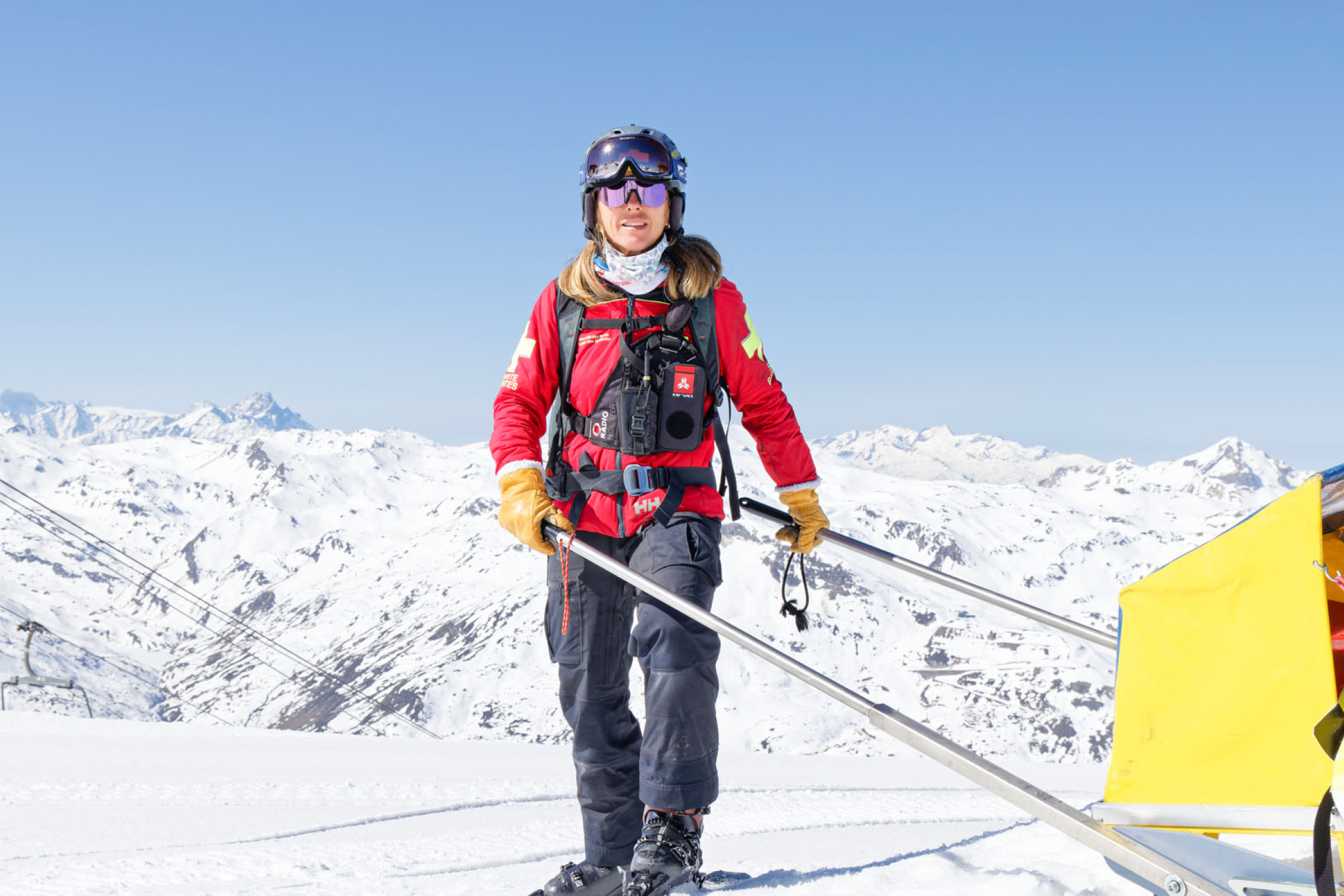
Several actions aim to improve safety and reassure skiers. Piste patrollers now play a stronger teaching role on the ground to prevent dangerous behaviour, as do ski instructors during lessons. Quiet ski zones have been marked out: these protected spaces, reserved for beginners, are off-limits to experienced skiers so their speed does not frighten newcomers. Helmet use is promoted through communication campaigns and by the example set by piste patrollers, ski instructors and ski-lift staff.
The Ski Patrol Experience embodies this teaching approach. On a 3,300 m² activity course, young visitors learn about mountain professions through a mini-snowmobile circuit and a helicopter-rescue simulation. Mountain hazards are explained in an accessible way, making it clearer what good behaviour on the pistes looks like.
The Montagnette beginner run completes this provision. This green run is set aside specifically for newcomers, to give them a calm and safe environment. On its upper section, nets and piste staff regulate access to suit each skier's level.
Safety rules and habits recommended for skiers
As with any sport, skiers should know the rules before setting off on the pistes. These come down to six points: wear a helmet; keep to a speed you can control; pull over well to the side of the piste, avoiding narrow sections or the approach to a bump; slow down and look around before changing direction; do not ski after the pistes close, when snow groomers are operating; and take a professional guide for off-piste skiing.
Benjamin Blanc also points out that 50% of head injuries could be prevented by wearing a helmet, which is why full safety equipment, including a helmet and a back protector, is recommended. Looking after equipment — having skis or a snowboard adjusted at a sports shop, for instance — along with physical preparation or a warm-up before putting on boots, is also advised, since skiing places heavy demands on the knees.
Key points
- The Avalanche Control Plan (PIDA) is triggered between 25 and 30 times a season, depending on the year.
- According to the director general of the body running the pistes across the Belleville valley, 80% of skiers over 35 injured while skiing never ski again.
- The Ski Patrol Experience is a 3,300 m² educational course designed to raise young visitors' awareness of mountain professions and hazards.
- 50% of head injuries could be prevented by wearing a helmet, according to the director general of the piste authority.
- Six rules of conduct are recommended on the pistes, including wearing a helmet, keeping speed under control and taking a professional guide for off-piste skiing.